Keynote Speakers
(Alphabetize by Last Name)

|
|
Asst. Prof. He Chen |
Dr. He (Henry) CHEN is currently an Assistant Professor in the Department of Information Engineering at the Chinese University of Hong Kong (CUHK), Hong Kong, China. He received his Ph.D. degree in Electrical and Information Engineering from The University of Sydney, Sydney, Australia. He was a Research Fellow with the School of Electrical and Information Engineering, The University of Sydney before joining CUHK. Dr. Chen's current research focuses on task-aware wireless intelligence, wireless and multimodal sensing, and their applications in robotics and open AI-RAN systems. Dr. Chen is serving on the editorial board of IEEE Transactions on Mobile Computing. He served on the editorial board of and IEEE Transactions on Wireless Communications between 2020 and 2025, and that of IEEE Wireless Communications Letters between 2020 and 2022.

|
|
Prof. Tae-Kyun Kim |
Tae-Kyun (T-K) Kim is Professor and the director of Computer Vision and Learning Lab at School of Computing, KAIST since 2020, and has been an adjunct reader of Imperial College London (ICL), UK for 2020-2024. He led Computer Vision and Learning Lab at Imperial College during 2010-2020. He obtained his PhD from Univ. of Cambridge in 2008 and Junior Research Fellowship (governing body) of Sidney Sussex College, Univ. of Cambridge during 2007-2010. His BSc and MSc are from KAIST in 1998 and 2000, he worked at Samsung AIT for 2000-2004 (military duty). His research interests primarily lie in machine (deep) learning for 3D computer vision, generative AI and Physics-based AI, including: articulated 3D hand/body reconstruction, face analysis and recognition, 6D object pose estimation, activity recognition, object detection/tracking, active robot vision, which lead to novel active and interactive visual sensing. He has co-authored over 100 academic papers in top-tier conferences and journals in the field, and has co-organised series of HANDS workshops and 6D Object Pose workshops (in conjunction with CVPR/ICCV/ECCV) since 2015 to 2020. He was the general chair of BMVC17 in London, the program co-chair of BMVC23, and is Associate Editor of IEEE Trans on PAMI, Pattern Recognition Journal, Image and Vision Computing Journal. He regularly serves as an Area Chair for top-tier vision/ML conferences. He received KUKA best service robotics paper award at ICRA 2014, and 2016 best paper award by the ASCE Journal of Computing in Civil Engineering, and the best paper finalist at CVPR 2020, and his co-authored algorithm for face image representation is an international standard of MPEG-7 ISO/IEC.

|
|
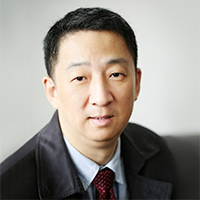
Prof. Bingang Xu |
Bingang Xu is a full Professor at The Hong Kong Polytechnic University. His research work has internationally been renowned for smart wearable technologies, with original and pioneering contributions to the development of high-performance energy harvesting and energy storage devices, smart wearable sensing, as well as flexible self-powered devices. Prof. Xu has published over 300 books, chapters, journal and conference papers, and also holds 16 granted patents. He leads his team in doing frontier research, and over the past 5 years, has published over 100 journal articles in top journals with impact factor over 10.0 and also in the Top 5% of ranked SCI journals, such as Nature Communications, Matter. He has been ranked among the World’s Top 2% Most-cited Scientists in the report of Stanford University. Prof. Xu serves now as an editor for npj Self-powered Electronics (Nature Portfolio journal, Springer Nature), Materials for Renewable and Sustainable Energy (Springer Nature), Fibers and Polymers (Springer Nature), and International Journal of Distributed Sensor Networks (Wiley), as well as sits on the editorial board for several other SCI journals such as Advanced Fiber Materials (Springer Nature), Sustainable Materials and Technologies (Elsevier). He also reviews for over 80 international journals, with about 30 world leading journals with impact factor over 10.0. Prof. Xu has served as General Chair and Program Chair for over 10 international conferences.
Title: Advanced Wearable Self-powered Sensing and Devices
Abstract: Self-powered electronics and devices are a multidisciplinary research topic spanning multiple fields, including electrical and electronic engineering, materials science, chemical engineering, and wearable technologies. In this talk, we will present recent advances from our team in this area, including self-powered sensing, wearable sensing, and self-powered electronics, with various advanced methods and technologies.
|
|
Prof. Yong Zhang |
Prof. Yong Zhang is currently a Chair Professor of Biomedical Engineering and Head of Department of Biomedical Engineering at City University of Hong Kong (CityUHK). Before he joined CityUHK, he had over 20 years of working experience in Department of Biomedical Engineering at National University of Singapore (NUS). He joined NUS as an Assistant Professor in 2002 and was promoted to Associate Professor in 2007, to Professor in 2013, and to Provost’s Chair Professor in 2017. He developed new technology for point-of-care diagnostics, photodynamic therapy, and optogenetics based on smart nanomaterials and wearable/implantable devices. His publications in top-tier journals (Nature Medicine, Nature Biomedical Engineering, Nature Communications, PNAS, Advanced Materials, etc.), many plenary/keynote/invited talks in international conferences, his contribution to academic communities and professional societies, and his effort in technology translation/commercialization, made him an internationally recognized researcher. His research achievements have been featured in magazines and news media, such as Nature, The Straits Times, and Lianhe Zaobao. He has received many awards, such as Global STEM Professorship (Hong Kong), Humboldt Research Award (Germany), and IES Prestigious Engineering Achievement Award (Singapore). He is a Fellow of Singapore Academy of Engineering (FSAEng), International Academy of Medical and Biological Engineering (IAMBE), American Institute for Medical and Biological Engineering (AIMBE), European Academy of Sciences and Arts, Institute of Electrical and Electronics Engineers (IEEE), and Royal Society of Chemistry (FRSC). He is also named as a Highly Cited Researcher by Clarivate Analytics and listed on World’s Top 2% Scientists by Stanford University and Elsevier BV.
Title: Advanced optical materials for biosensing and bioimaging
Abstract: Many biosensing and bioimaging applications require use of fluorescent nanomaterials converting light from one wavelength to another. Traditional fluorophores including fluorescent dyes/proteins and quantum dots are based on ‘downconversion fluorescence’, converting high energy photons (UV or visible) to low energy photons (visible to NIR). Upconversion nanoparticles present a new technology for biosensing and bioimaging in various fields. Unlike traditional fluorophores, upconversion nanoparticles emit detectable high energy fluorescence in the UV/visible/NIR range upon irradiation with NIR light based on a process termed ‘upconversion’. They can be used for ultrasensitive interference-free biosensing/bioimaging because most biomolecules do not have this upconversion property. The major advantages of this approach include but are not limited to: multi-color, low background autofluorescence, single wavelength excitation, good photostability, and spectral unmixing. Even with all the above-mentioned advantages, this technology did not become popular for almost a decade. The nanoparticles synthesized initially were irregular in shape, soluble in organic solvents only and large in size. All these factors hampered them from being used for biological applications. We developed a single-step hydrothermal synthetic procedure to produce highly regular, sub 100-nm and water-soluble upconversion nanoparticles, and demonstrated their applications in biosensing and bioimaging.
Invited Speakers
(Alphabetize by Last Name)
|
|
Assoc. Prof. Boon Giin Lee |
Boon Giin Lee (Bryan) received the B.I.T. degree in information technology from Multimedia University, Malacca, Malaysia, in 2007, the M.S. degree in electronic engineering from Dongseo University, Busan, South Korea, and the Ph.D. degree in electronic engineering from Pukyong National University, Busan. From 2012 to 2013, he was a Researcher with the Ubiquitous Sensor Network Laboratory, Pukyong National University. From 2014 to 2019, he was employed as an Assistant Professor with the Department of Electronic Engineering, Keimyung University, South Korea. Since 2019, he was employed as an Assistant Professor, and became Associate Professor in 2022, with the School of Computer Science, The University of Nottingham Ningbo China. Bryan has published more than 100 papers in journals, conferences and books chapters and holds dozen authorised patents. He has served as a guest editor for several journals and as reviewer for more than 30+ journals. His research interests include human-computer interaction, intelligent multi-sensing, extended reality and ubiquitous sensors networks.
|
|
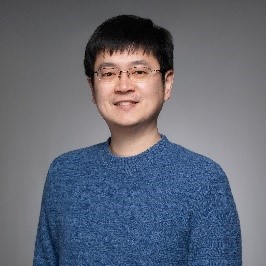
Prof. Keqin Liu |
Prof. Keqin Liu received his PhD degree from the University of California at Davis in 2010 and joined industry as a software engineer in 2012 after 2 years of postdoc experience. After 8 years of working in the Silicon Valley, Prof. Liu still has a lot passion in mathematics and decided to return to academia in 2020 when working in ASML and subsequently taught in Nanjing University until joining Xi’an Jiaotong-Liverpool University in 2024. Prof. Liu’s research interests include the development of modern math theory for AI technologies, the extension of pure math theory, especially number theory, and the application of pure math theory to solving practical problems in machine learning, e.g., multi-armed bandit in reinforcement learning. Prof. Liu has published over 40 academic papers in top international journals and conferences including Management Science, IEEE Transactions on Information Theory, and NeurIPS. Prof. Liu has received the 2023 Zhi-Jian Award for Excellence in Teaching (mathematics) from Nanjing University, the 2024 SIP International Leading Talent Award from Suzhou, and the 2025 Excellent Research-led Learning Supervisor Award from Xi’an Jiaotong-Liverpool University.
Title: High-Dimensional Reinforcement Learning by Multi-Armed Bandits
Abstract: The main challenge in machine learning is the complexity of high-dimensional problems. The way of data sampling itself becomes crucial during the learning evolution process. The tradeoff between exploration and exploitation is well modeled by the Multi-armed Bandit (MAB) problems. In this talk, we present some recent results from my own group on the techniques innovated to solve such high-dimensional reinforcement learning problems. Furthermore, we will illustrate the process of transforming pure math theories into applied fields for efficient algorithm developments and optimizations.
To be announced soon...
Part of Previous Speakers
(Alphabetize by Last Name)
Prof. Pingyi Fan
Tsinghua University, China

Assoc. Prof. Paul Weng
Duke Kunshan University, China
Prof. Bingang Xu
The Hong Kong Polytechnic University, Hong Kong, China

Prof. Zhijie Xu
Xi’an Jiaotong-Liverpool University, China